

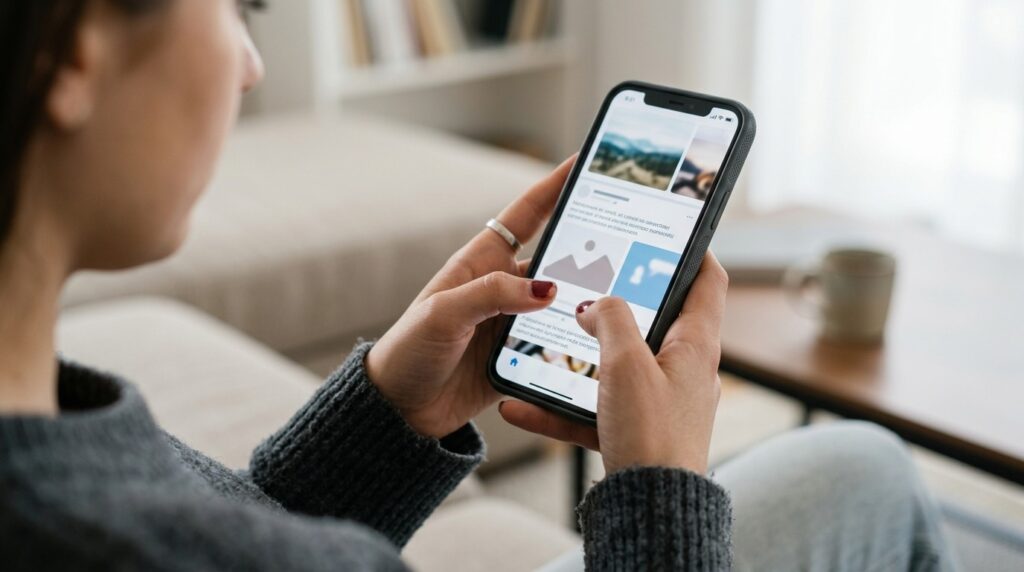
Social Media Silent Scroller Traits describe the patterns and characteristics often associated with people who regularly consume social media content without liking commenting sharing or otherwise interacting publicly. On platforms such as Instagram TikTok and X many users scroll through posts read updates watch videos and then leave without leaving a visible reaction. Researchers commonly describe related behavior using terms such as lurking passive consumption or passive social media use.
This behavior is not necessarily unusual or a sign that someone is uninterested in the content they see. Research on online communities and social media has examined why people consume information without actively participating with findings pointing to factors such as privacy information gathering entertainment personal preferences and the desire to avoid public interaction.
This article examines what silent scrollers are what characteristics may appear among passive social media users why people scroll without engaging and what this behavior can mean for marketers content creators platform designers and businesses managing social accounts. The goal is to distinguish findings supported by research from broad psychological claims that are often repeated without strong evidence.
Who Counts as a Silent Scroller
A silent scroller in research terms is a user who consumes content regularly but rarely or never takes a visible action like commenting liking sharing or posting original content. Usability researcher Jakob Nielsen described this pattern in 2006 as the 90-9-1 rule of participation inequality: roughly 90 percent of users in a typical online community are lurkers who read or observe without contributing 9 percent contribute occasionally and 1 percent account for most of the visible activity. That split is not fixed. Nielsen found blogs skew even more heavily toward silence and Wikipedia is more extreme still with well over 99 percent of visitors never editing a page.
The important distinction here is that silent scrolling is not the same as being logged off or disengaged. These users are actively consuming content forming opinions and often making decisions based on what they see. They just do not leave a visible trace. That is a meaningful difference for anyone measuring engagement purely through likes and comments because it means the visible audience for a post is usually a small fraction of the people who actually saw it.
Why People Scroll Without Engaging
There is no single reason behind silent scrolling but several patterns help explain Social Media Silent Scroller Traits. Some users avoid commenting or posting because public interaction can expose them to judgment disagreement or unwanted attention.
Another common factor is habit. Many people became accustomed to consuming content without posting or interacting especially from earlier online platforms where reading was often the primary way to participate.
Time and effort also influence Social Media Silent Scroller Traits. Watching a video or reading a post requires little effort while writing a comment or deciding whether to react adds an extra step that users may simply skip.
Some people also naturally prefer consuming content rather than creating it. They use social media mainly for information and entertainment treating it more like a news source or magazine than a place for self-expression.
The Behavioral Traits Researchers Have Identified
Academic work on lurking behavior has tried to move past the assumption that silent users are simply disengaged. A study from Singapore Management University examining more than a hundred thousand users across two Twitter communities over eighteen weeks set out specifically to characterize lurkers and build methods for profiling them treating them as a group worth understanding rather than a gap in the data. That framing matters because it treats silent users as a distinct behavioral pattern not a failure of engagement.
Other research has focused on personality traits tied to lurking habits. Work presented at academic conferences on social media behavior has looked at how traits like self-esteem and offline social support relate to how often someone lurks versus posts with preliminary findings suggesting that users with lower physical self-esteem lurk photo content more and that people who lurk more frequently tend to seek less socio-emotional support offline. This does not mean every silent scroller fits that profile but it does suggest lurking behavior connects to broader patterns in how people manage social comparison and self-presentation not just a simple preference for privacy.
The Mood and Comparison Angle
One of the more cited threads of research on passive social media use comes from psychologists Philippe Verduyn and Ethan Kross whose experiments found that passive use meaning scrolling and consuming content without interacting was linked in some studies to a short-term dip in mood with social comparison suspected as the mechanism. Seeing curated highlights from other people’s lives without the balancing effect of your own participation can quietly shift how someone feels about their own life even if they can’t point to a specific post that caused it.
That said more recent work complicates the picture. A 2022 scoping review published in New Media and Society led by researcher Patti Valkenburg found that the effects of active versus passive social media use vary considerably by person and by situation meaning there is no universal rule that silent scrolling makes everyone feel worse. Some people scroll passively and feel perfectly fine. Others notice real dips in mood after long sessions of consuming without engaging. The honest takeaway is that passive use carries some comparison risk but it plays out differently depending on the individual and what they’re looking at.
Why the 90 Percent Are Not a Wasted Audience

For anyone creating content the instinct is to treat likes and comments as the real measure of whether something worked. That instinct misreads how most audiences actually behave. If roughly nine out of ten people who see a post never interact with it publicly then judging content purely by visible engagement means ignoring the majority of the people it actually reached.
Silent scrollers still make decisions based on what they see. They form opinions about brands remember product names click through to websites and eventually convert or recommend a company to someone else all without ever commenting on a single post. Treating low engagement rates as proof that content is not working rather than as an expected outcome of participation inequality leads marketers to chase vanity metrics instead of tracking outcomes that actually matter like traffic conversions and brand recall.
What This Means for Content Strategy
Building content strategy around the assumption that most of your audience is silent changes what you optimize for. Instead of designing every post purely to bait a comment or a share it makes sense to also focus on clarity usefulness and shareability in a passive sense meaning content that is easy to screenshot easy to remember and easy to act on later even if the person never engages publicly in the moment.
It also means diversifying how success gets measured. Reach and impression counts capture the silent audience that comment counts miss entirely. Website referral traffic from social platforms branded search volume and direct conversions tied to a campaign period all give a better picture of whether silent scrollers are actually absorbing and acting on content compared to relying solely on a comment section that only ever reflects the most vocal fraction of the people who saw a post.
Platform Differences Worth Knowing
Lurking rates are not identical across platforms and that has practical implications for where a brand focuses its energy. Nielsen’s original research noted that blogs tend to have even steeper participation inequality than general online communities and Wikipedia sits at an extreme end where editing is a highly specialized action most visitors never attempt. Social platforms built around short-form video and image content like Instagram and TikTok tend to have somewhat lower barriers to a quick reaction like a like or a heart tap which can nudge the ratio slightly though the core pattern of a small vocal minority driving most visible activity still holds.
Professional networks like LinkedIn show a similar dynamic but with a different motivation behind the silence. Many users browse for job leads industry news or hiring signals without ever posting largely because commenting or sharing on a professional platform carries reputational weight that casual platforms do not. Understanding which platform a brand is active on and what kind of friction stops users from engaging there helps set realistic expectations for what engagement numbers should actually look like.
Common Misreadings of Silent Scroller Behavior
One of the biggest mistakes marketers make when analyzing Social Media Silent Scroller Traits is assuming that a lack of visible engagement means disinterest. A person may view a post remember the information and take action later without ever liking, commenting or sharing it.
For example a silent scroller may:
- Remember a brand after seeing its content.
- Visit the website later.
- Research a product before making a decision.
- Recommend the brand to someone offline.
This means likes and comments do not always capture the full impact of social media content. Social Media Silent Scroller Traits can also vary significantly between users.
Silent scrollers may include:
- People researching a potential purchase.
- Professionals following industry news.
- Casual users who prefer consuming rather than creating content.
Treating every silent scroller the same can lead to generic content strategies. Understanding different Social Media Silent Scroller Traits helps marketers create content that better matches why people browse without actively engaging.
Final Thought
Understanding Social Media Silent Scroller Traits is more useful than treating silent scrolling as a problem that needs to be fixed. Many social media users consume significantly more content than they visibly contribute making likes comments and shares only part of the overall picture.
For brands and content creators the key takeaway is to recognize that the quiet audience is still paying attention. People may form impressions remember a brand visit a website or take action later without ever interacting publicly. Understanding Social Media Silent Scroller Traits can therefore help businesses create content that connects with audiences beyond visible engagement.
FAQs
What is a silent scroller on social media?
A silent scroller is someone who regularly consumes social media content by scrolling through posts videos and feeds without commenting liking sharing or posting original content. These Social Media Silent Scroller Traits reflect a pattern of passive content consumption with little visible interaction.
What percentage of social media users are silent scrollers?
There is no single official percentage but the widely cited 90-9-1 rule suggests that roughly 90% of users in a typical online community are lurkers. These Social Media Silent Scroller Traits can vary by platform so the exact ratio is not fixed.
Is silent scrolling bad for mental health?
Research on Social Media Silent Scroller Traits and mental health is mixed. Some studies link passive scrolling with short-term mood dips related to social comparison while a 2022 review found that the effects vary by individual and situation meaning silent scrolling is not a universal mental health risk.
Why do some people never comment on social media even if they use it daily?
Common Social Media Silent Scroller Traits include avoiding public judgment skipping the effort of commenting and preferring to consume content rather than create it.
Should brands worry if their posts get views but few comments?
Not necessarily. Low visible engagement is the expected outcome when most of an audience are silent scrollers so it is more useful to track traffic conversions and reach than to treat comment counts as the main success metric.
Are silent scrollers less valuable to a business than active commenters?
No. Silent scrollers still form brand impressions make purchase decisions and can convert or refer others without ever leaving a public comment which makes them a meaningful part of any audience rather than a wasted one.