

Introduction
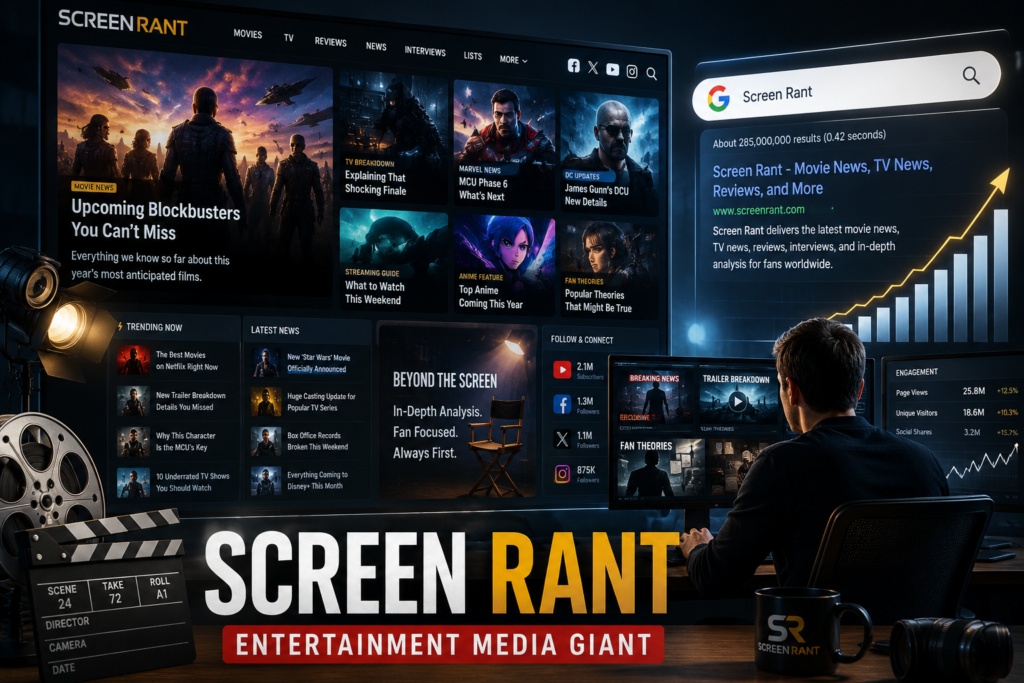
Why Screen Rant appears at the top of so many movie-related searches comes down to more than just good SEO. Over the past two decades the site has built a reputation for delivering fast entertainment news in-depth analysis fan theories and detailed explanations that readers actively seek out. Whether a major blockbuster is arriving next month or a television finale has everyone talking Screen Rant has positioned itself as one of the first destinations fans visit to find answers context and discussion. What started back in 2003 as a modest corner of the internet run by people who genuinely loved film has quietly become one of the biggest entertainment destinations on the web. That journey reflects something larger happening in media readers stopped waiting for the Sunday supplement and started wanting their opinions hot searchable and written by someone who actually cared.
The audience Screen Rant has built is not passive. These are people who finish a season finale and immediately want to know what just happened in that last scene or who read three casting announcements before breakfast. The site earned their loyalty by doing something deceptively simple: treating fans as smart adults who happen to want information without the stuffiness. To really understand how it pulled that off you have to look at where it came from what it actually believes about covering entertainment and why the timing of its rise was almost perfectly calibrated to the moment.
The Origins and Founding Story of Screen Rant
Screen Rant was launched in 2003 by Vic Holtreman who began the site as a personal passion project dedicated to covering movies and television with the kind of enthusiasm that only a genuine fan could muster. Like many of the great entertainment websites of that era it started without a large budget a corporate backer or a team of credentialed journalists. What it had instead was a community of contributors who cared deeply about the art of filmmaking and who understood that audiences were starving for content that met them at their level rather than talking down to them from an ivory tower.
Over the years following its founding the site grew steadily by attracting writers who shared its founding editorial instincts. Rather than simply reporting news Screen Rant consistently offered a layer of opinion analysis and speculation that made readers feel like they were part of an ongoing conversation about the films and shows they loved. This participatory quality set it apart from more traditional outlets and helped build a loyal readership that returned day after day not just for information but for the experience of engaging with content that matched their own level of devotion to popular culture.
How Screen Rant Shaped Modern Entertainment Journalism
One of the most significant contributions that Screen Rant has made to the media landscape is helping define what modern entertainment journalism looks like. Before sites like it emerged film coverage was dominated by legacy publications with long editorial cycles and a preference for retrospective analysis over real-time engagement. Screen Rant changed the game by proving that fast frequent and genuinely insightful publishing could coexist and that audiences would reward that combination with their attention and their clicks.
The site also pioneered formats that have since become standard practice across the internet. Its listicles explainer articles and “ranked” pieces were once viewed as lowbrow by traditionalists but they turned out to be extraordinarily effective tools for serving readers who wanted quick organized information without having to read through dense prose to get to the point. Screen Rant demonstrated that respecting the intelligence of an audience does not mean burying the lead and that structure and readability can coexist with genuine analytical depth. Many of the practices now common across digital entertainment media were refined if not invented at outlets like this one.
The Editorial Philosophy Behind Screen Rant’s Success
At the core of what makes Screen Rant tick is an editorial philosophy that prioritizes the reader’s desire to feel like an informed insider. Every article is written with the assumption that the person reading it is a genuine fan who has already seen the trailers has read the casting news and now wants something more: context analysis comparison or speculation about what comes next. This approach creates a kind of trust between the publication and its audience a sense that the writers understand what it means to be emotionally invested in a fictional universe and to want every scrap of available information about it.
The editorial team has also shown a remarkable ability to balance coverage breadth with focused depth. On any given day Screen Rant publishes pieces about blockbuster superhero films alongside articles about independent cinema prestige television dramas anime video game adaptations and cult classics. This wide net ensures that readers with a range of tastes can find something relevant while the consistent tone and approach across those varied topics create a sense of coherence that keeps the brand identity intact regardless of what is being covered.
Screen Rant’s Relationship With the Marvel and DC Universes
No discussion of Screen Rant would be complete without acknowledging the central role that superhero cinema has played in the site’s growth and identity. The explosion of the Marvel Cinematic Universe beginning in 2008 and the subsequent expansion of DC’s cinematic efforts gave Screen Rant an almost inexhaustible supply of content opportunities. From speculation about release dates and casting rumors to deep-dive analyses of post-credits scenes and connected universe timelines the site rode the wave of superhero saturation in popular culture with remarkable skill and strategic savvy.
Screen Rant has developed a particular expertise in explaining the complex interconnected mythology of these franchises to readers who may not have read the original comics. Articles walking readers through characters’ comic book origins explaining the significance of a particular Easter egg or laying out the timeline of events across multiple films became a reliable traffic engine for the site. This kind of service journalism where the goal is genuinely to help a reader understand something complicated reflects the best of what the outlet has always tried to do: make the experience of being a fan richer and more rewarding.
The Role of Screen Rant in the Age of Streaming Wars
The rise of streaming platforms Netflix Disney+ HBO Max Apple TV+ Amazon Prime Video and the many others that followed created an entirely new set of content demands for entertainment journalism outlets. Audiences suddenly had access to more original programming than any human being could realistically consume and they needed guides recommendations and explanations to help them navigate this overwhelming abundance. Screen Rant responded to this shift with characteristic agility expanding its coverage to include streaming-native content without losing its core identity as a film and television destination.
The site has also been effective at covering the business side of the streaming wars explaining to readers what platform mergers mean for their favorite shows why a beloved series was cancelled despite strong viewership or how exclusive licensing agreements affect what content is available where. This added layer of industry analysis has helped Screen Rant remain relevant not just as an enthusiast destination but as a genuinely informative source for anyone trying to make sense of the rapidly evolving media landscape. It occupies a rare position: popular enough to attract a mass audience yet substantive enough to satisfy readers who want more than gossip.
Writing Style and Content Formats That Define the Brand
A distinctive feature of Screen Rant is the variety of content formats it employs to engage its audience. Beyond standard news articles the site regularly publishes ranked lists trivia pieces character breakdowns filming location guides behind-the-scenes histories and thematic essays that explore why a particular film or show resonates emotionally with its audience. This variety keeps the site feeling fresh and ensures that readers with different reading habits and levels of engagement with any given topic can always find something that suits them.
The writing style that runs through all of these formats is conversational without being casual informative without being dry and enthusiastic without tipping over into breathless fan worship. Writers at Screen Rant are expected to have opinions and to express them clearly but also to support those opinions with evidence drawn from the films and shows themselves from interviews with creators or from the broader cultural conversation happening around a given property. This balance between voice and rigor is genuinely difficult to sustain at the publication volume the site maintains which makes the consistency of its quality all the more impressive.
How Screen Rant Handles Spoilers and Breaking News
In the world of entertainment journalism few editorial decisions are more fraught than how to handle spoilers. Reveal too much too soon and you alienate readers who haven’t seen a film yet; hold back too long and risk losing traffic to less considerate competitors who published everything the moment it became available. Screen Rant has navigated this tension more gracefully than most outlets developing a set of practices around spoiler warnings headline construction and article structure that respects both the readers who want to know everything immediately and those who are carefully avoiding information until they can watch something themselves.
The site’s approach to breaking news is similarly thoughtful. Rather than racing to be first at the expense of accuracy Screen Rant has built a reputation for verifying information before publication and for clearly distinguishing between confirmed facts credible rumors and pure speculation. In an era when entertainment news is frequently generated by anonymous insiders with unclear motives and amplified by social media before anyone has had a chance to check it that commitment to editorial standards represents a meaningful differentiator and a genuine service to readers who want to know what is actually real.
Screen Rant’s Expansion Into Video and Social Media
Like all successful digital media companies of the past two decades Screen Rant recognized early that written articles alone would not be sufficient to capture and retain an audience that was increasingly consuming content through video platforms and social media feeds. The site expanded its presence onto YouTube where it has amassed a substantial subscriber base by producing video essays trailer reactions cast interviews and ranking videos that adapt its written content into formats suited to a visual medium. This expansion has introduced Screen Rant’s editorial voice to audiences who might never have found it through a Google search.
On social media platforms including Instagram X (formerly Twitter) TikTok and Facebook Screen Rant has developed a presence that functions both as a promotional channel for its longer articles and as a standalone content hub where short-form opinions trivia and breaking news can reach readers in the moment. Managing a coherent brand identity across all of these platforms while tailoring the tone and format of content to what works in each environment is a significant organizational challenge and the site has handled it with the kind of strategic consistency that speaks to mature editorial leadership.
Criticism Controversies and the Ongoing Debate About Clickbait
No media outlet of Screen Rant’s scale and influence escapes criticism and this site is no exception. Over the years it has faced recurring accusations of producing clickbait headlines that overpromise and underdeliver of publishing speculative articles that blur the line between reporting and fiction and of contributing to the general inflation of entertainment coverage that can make genuine news difficult to distinguish from manufactured controversy. These are criticisms that the site shares with virtually every large digital media outlet but they are worth taking seriously because they speak to real tensions inherent in the business model of ad-supported internet publishing.
To its credit Screen Rant has responded to sustained criticism by making visible efforts to improve the quality and accuracy of its output. Changes in editorial leadership shifts in publishing strategy and the gradual elevation of longer-form analysis pieces alongside the high-volume news coverage suggest an awareness that the site’s long-term reputation depends on being trusted by its audience not just clicked on by them. The ongoing debate about these issues reflects broader questions about the economics of digital journalism that no single outlet can resolve on its own but how Screen Rant continues to respond will say a great deal about where it ultimately lands in the hierarchy of entertainment media.
The Cultural Legacy of Screen Rant in Fan Communities
Perhaps the most enduring legacy of Screen Rant is not the individual articles it has published or the traffic milestones it has hit but the role it has played in shaping how fans think and talk about the media they love. For millions of readers articles from this outlet have provided the vocabulary the historical context and the analytical frameworks that they use when discussing films and television shows with friends on social media or in comment sections. The site has functioned whether intentionally or not as a kind of informal film school for the internet generation distributing a baseline of cinematic and narrative literacy to an enormous audience.
Fan communities around every major franchise from the Marvel Cinematic Universe to Star Wars to Game of Thrones to anime have been significantly shaped by the coverage they received on Screen Rant. The theories analyses and ranked assessments the site published became conversation starters in forums subreddits and Discord servers multiplying the site’s influence far beyond its own pages. This kind of ripple effect is the truest measure of cultural impact and by that measure Screen Rant’s place in the history of modern entertainment media is secure regardless of what any future traffic analytics might suggest.
Conclusion
Screen Rant has spent more than two decades proving that entertainment journalism can be both popular and substantive both fast and accurate both opinionated and fair. It has navigated the shift from desktop browsing to mobile-first reading from text to video from news articles to social media posts and from a handful of major film studios to a sprawling ecosystem of streaming platforms and global productions. Through all of those transitions it has maintained a recognizable editorial identity that readers trust and return to because it delivers something genuinely valuable: a thoughtful enthusiastic and informed perspective on the stories that culture is telling about itself through movies and television.
The site’s influence on entertainment journalism fan culture and digital media broadly is difficult to overstate. It helped establish the formats the tone and the expectations that now govern how entertainment content is produced and consumed across the internet. For anyone seeking to understand the evolution of media criticism in the digital age Screen Rant is not just a useful case study it is an essential one. Whatever challenges lie ahead in the ever-shifting media landscape the foundation this outlet has built over two decades suggests it is well-positioned to remain a central voice in the conversation about the films and shows that define our cultural moment.
FAQs
What is Screen Rant and what kind of content does it publish?
Screen Rant is a major entertainment news and analysis website founded in 2003 that covers movies television series streaming content comic book adaptations anime and broader pop culture topics. Its content includes breaking news ranking articles character explainers theory breakdowns trailer analyses and long-form essays about the history and significance of films and shows. The site publishes dozens of articles every day and maintains a YouTube channel and active social media presence alongside its written content.
Who founded Screen Rant and when did it start?
Screen Rant was founded in 2003 by Vic Holtreman. It began as an independent fan-driven website focused on movies and television and grew organically over the following years through a combination of passionate contributors and smart editorial decisions that anticipated how digital audiences wanted to consume entertainment content. The site was eventually acquired by Valnet Inc. a digital media company that owns several entertainment and tech-focused websites which provided resources for its continued expansion.
Is Screen Rant a reliable source for entertainment news?
Screen Rant is generally considered a reliable source for entertainment news particularly for breaking casting announcements release date updates trailer coverage and analysis of major film and television releases. Like all large-scale digital media outlets it occasionally publishes speculative content that should be read with some skepticism and it clearly labels opinion and theory pieces as distinct from reported news. Readers who approach the site with an understanding of its editorial mix will find it both trustworthy and informative for most entertainment topics.
How does Screen Rant approach spoilers in its articles?
Screen Rant takes spoilers seriously and has developed editorial practices around protecting readers who want to avoid plot details before watching a film or series. The site typically uses prominent spoiler warnings in headlines and at the top of articles when the content discusses major plot points and it structures many of its pieces so that readers who want to stop before reaching spoiler territory can easily identify where that line falls. This approach reflects a genuine effort to serve readers with different preferences rather than simply prioritizing maximum information disclosure at all times.
Does Screen Rant have a YouTube channel and what kind of videos does it produce?
Yes Screen Rant maintains an active YouTube channel with a significant subscriber base. The channel produces a wide range of video content that adapts the site’s written editorial approach to a visual format including ranked lists film and television history explainers trailer reaction and breakdown videos movie pitch segments where hosts reimagine existing films with different creative choices and cast interview content. The YouTube presence has introduced Screen Rant to many viewers who primarily consume video content rather than reading articles online.
What makes Screen Rant different from other entertainment websites?
Several qualities distinguish Screen Rant from its competitors. Its combination of high publishing volume with consistent analytical depth is relatively rare among entertainment outlets. The site has also been notably consistent in maintaining an editorial voice that speaks to genuine fans rather than casual observers which has built a particularly loyal readership. Additionally its willingness to cover a genuinely broad range of entertainment genres from major Hollywood blockbusters to independent films prestige television anime and cult cinema means it serves a more diverse audience than many sites that specialize narrowly in a single content category.
How can writers contribute to or get published on Screen Rant?
Screen Rant has historically operated with a large network of freelance and staff contributors and it has at various points recruited new writers through application processes advertised on its website and through industry networks. Prospective contributors are typically expected to demonstrate familiarity with the site’s editorial tone and content formats strong writing skills and a genuine knowledge of film and television history. Those interested in contributing should check the site’s official careers and contributor pages for current opportunities as the specifics of the application process can change based on the site’s staffing needs at any given time.